
Imagine two toilets for public use. Two public restrooms. One is a trailhead located in a rural area that is surrounded by vast open spaces.
Both buildings offer the same services but when they were built as identical buildings it would be difficult to discern how these places function.
Good public restroom buildings begin with the site. Who will use the facility? How many people may arrive at once? What utilities are available? How far will visitors have to walk? What architecture surrounds the building?
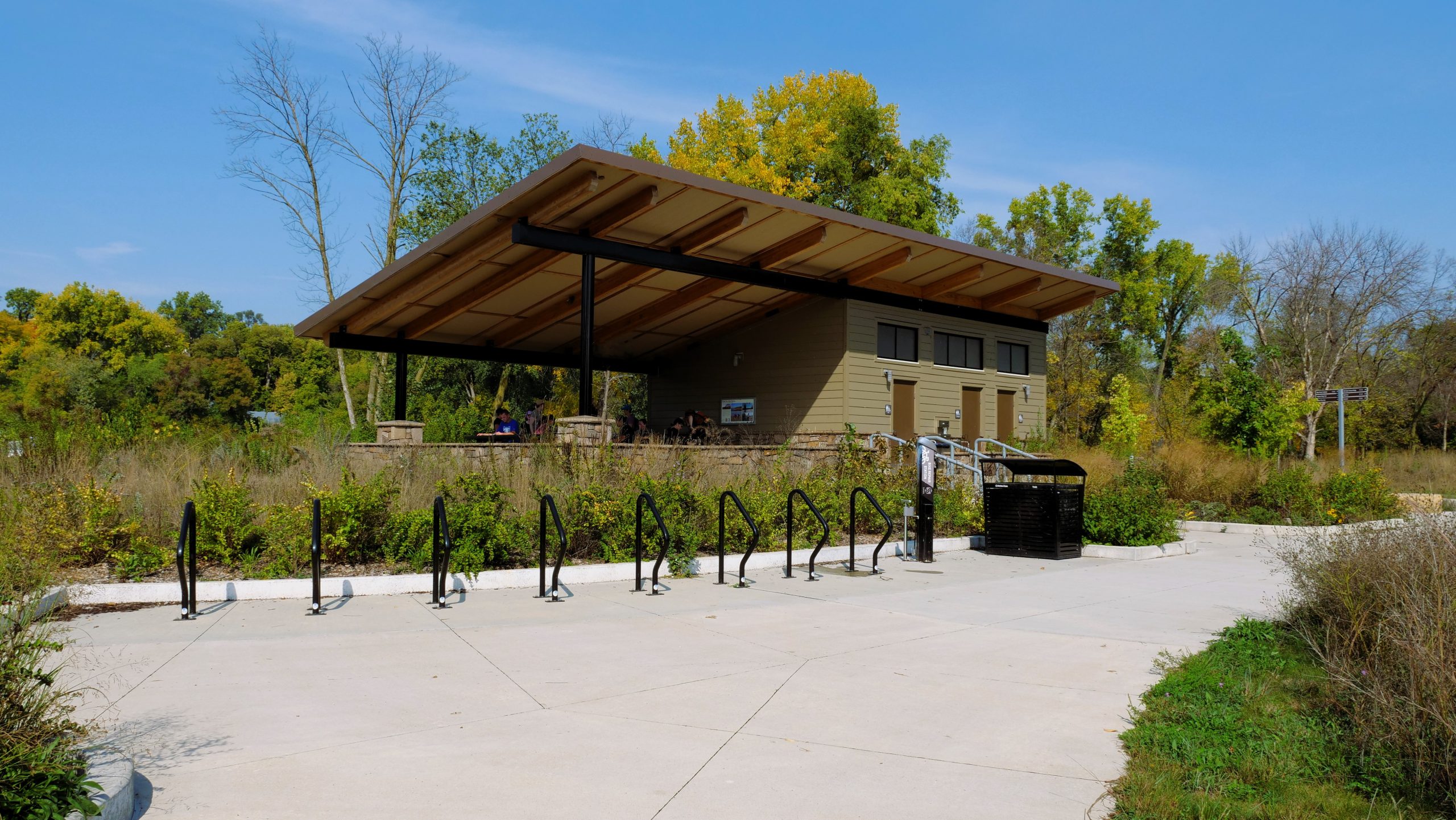
Image credit: romtec.com
The answers to these questions will influence nearly all of the decisions that are made.
Begin with how people move through the Site
Restroom placement shouldn’t be considered independently from the rest of a park. In a sports facility, visitors may arrive in large numbers during games and events. The restrooms for playgrounds need to be conveniently located for families, while also fitting within the pedestrian flow. In urban settings, the footprint of sidewalk restrooms can be smaller, and they might need to complement other streetscape elements.
The building is only one element of the experience. Location is affected by surrounding environment accessibility, walkways, and activities.
Remote sites can cause a new problem
The project must be relocated away from the street and utilities infrastructure. A scenic view, a campsite, trailhead, or even a remote recreation spot may not be connected to the sewer system that is commonly used. Vault toilets are a viable option which can be utilized in locations where traditional plumbing infrastructure isn’t feasible or impossible.
The design discussion is completely different. Teams working on projects do not need to pick a location prior to analysing the site and deciding the best restroom solution. best.
Capacity should reflect the real-world usage
A park located in a tranquil neighborhood or a sports facility regionally don’t have the same patterns of visitors. In peak times, demand is essential. A facility that appears to be adequate for a typical Tuesday afternoon may face different conditions on a Saturday festival, tournament, or any other type of community event.
Owners may plan their home around the usage of the bathroom, taking into account the capacity, layout, and fixtures, in addition to access for maintenance.
If you are a company looking at facilities for park restrooms that are prefabricated, flexibility can be particularly beneficial since the structure can be designed to meet the project’s requirements instead of having to build the facility in a predetermined model.
The Architecture Conversation Is Still Participates to Us
An appearance isn’t ignored simply because it’s an aspect. Public restrooms are part of the landscape. The roof’s forms, sidings, colors, masonry and fixtures can be used to relate it to adjacent pavilions, concessions and natural surroundings, or as a design theme for the community.
Romtec’s customized approach permits teams to work with various materials, colors and shapes, as well as exterior treatments, rather than being restricted to a standard appearance.
Designing for the Place, not Just the Design for the
Romtec collaborates with park owners and contractors to provide and construct bathrooms and other public facilities. Its experience includes building documents as well as code requirements, ADA considerations, engineering components, selection of the right component, and construction throughout the United States.
However, the crucial starting point is surprisingly simple. Do not start by asking yourself what kind of restrooms you can build on your site. Begin by studying the activities, people, infrastructure, and the environment that is already there. Then, design the structure which is a part of it.