
A significant contract is won by an industrial manufacturer. The monthly production needs increase however, the plant isn’t equipped with more space and has employees with previous experience or additional hours during the daytime. While adding another shift may temporarily help, it could be a source of new work as well as training, supervision, and requirements for quality control.
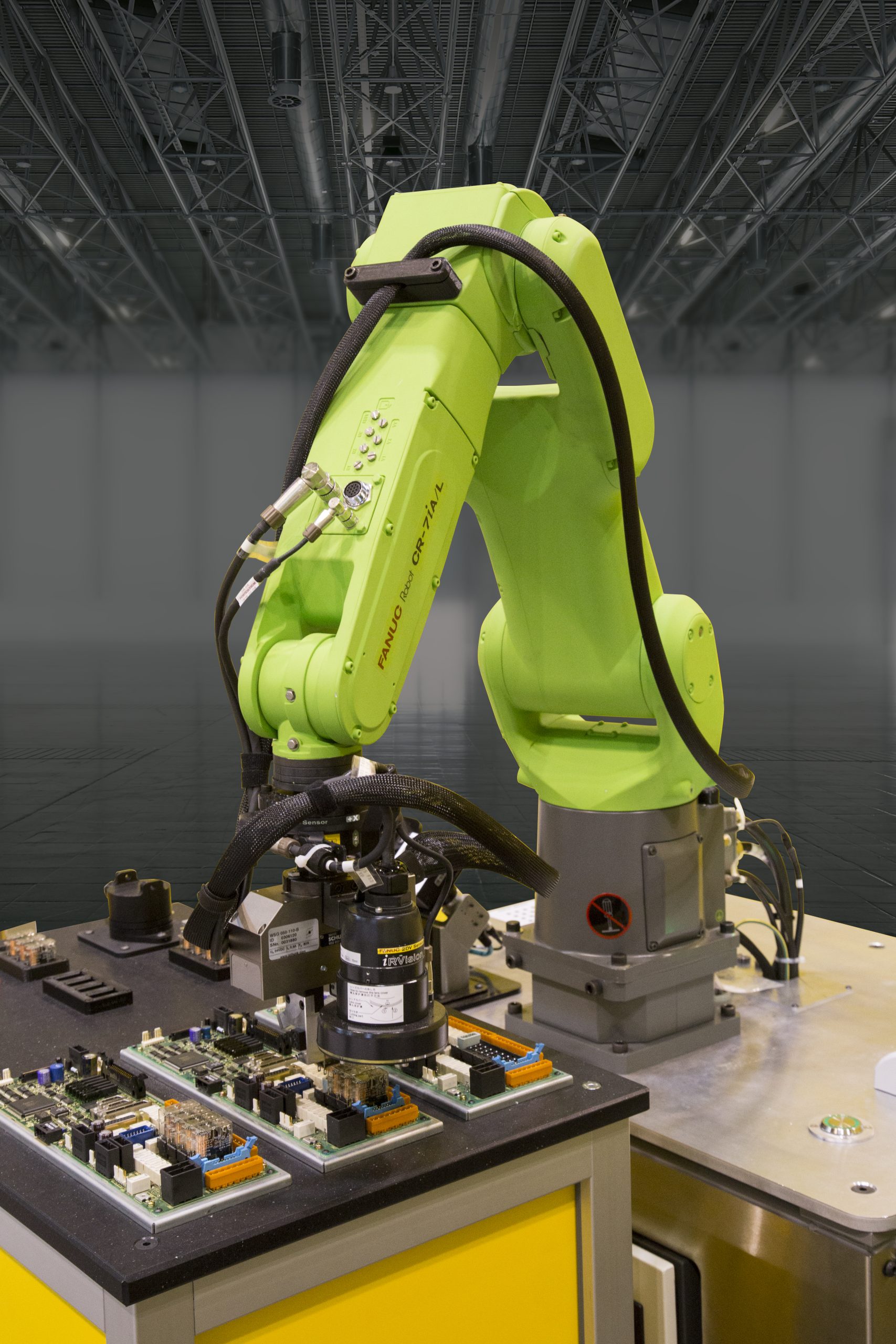
Image credit: automatedsolutions.com.au
This kind of situation reveals the importance of robotic automation. Robotics does not only mean replacing humans with machines. The right application can transform the way that manufacturers use their capacity to produce.
Check out the amount of time that is lost between products
Inefficient manufacturing is not always apparent. An operator may spend 15 minutes putting the part in place before implementing 10 seconds of materials, and a few more seconds moving it to the next step. The time difference could seem minor for a single part. When repeated thousands of times the seconds are important production times.
This is also true of wasted material. The same is true to waste materials.
Before making a decision on the equipment they require, businesses looking into robotic automation Australia can benefit by analyzing these small losses. The needs analysis conducted by ASA is designed to find bottlenecks and quality issues, waste and other processes that could affect an automation project.
Robots must be able to fit into the process.
Making a choice on a robot is only one engineering decision. Guardings, tools, controls as well as conveyors, sensors and fixtures might also be needed. Engineers should consider the payload and reach while determining how the robot will move through its area of work and interact with the environment surrounding it.
The ASA approach to FANUC robot automation includes the development of concepts and systems as well as CAD Simulation and offline programming. The digital simulation allows engineers to examine configurations, estimate cycle time and allow them to test the system before it is operational on the customer’s floor. This is particularly helpful in cases of space limitations or if new robotics require to be integrated with existing production lines.
Dispensing and Paint Shows Why Replicability is Crucial
Some manufacturing processes illustrate the importance of controlled motion particularly well. Imagine applying a protective coating to hundreds of parts. It’s not enough just to finish every component quickly. From the start of production until the final stage the speed, movement of the machine, the distance and the application have to be controlled.
ASA is a specialist in painting and dispensing systems across industries including automotive and aerospace. In these environments, industrial robotic automation can provide repeatable programmed movement while also reducing employee exposure to physically demanding or potentially hazardous processes.
The reduction of waste and the improvement in productivity can be achieved through better management.
Even after the installation the system will still require individuals
Automating doesn’t completely eliminate the requirement for knowledge in manufacturing. It transforms the knowledge needed to operate and maintain the process.
Employees should be able detect abnormal behavior and identify problems, as well as perform the appropriate maintenance. Production requirements may also alter, which means that programs and processes may need modifications later.
ASA provides training on-site for programming, safe operation, troubleshooting, as well as electrical and mechanical maintenance. The company provides servicing and assistance for assessing the condition of equipment and taking care to address wear and tear throughout the life of the system.
Capacity is more than simply working faster
A rise in capacity for Australian manufacturing companies doesn’t need to mean purchasing a larger facility or adding more workers on repetitive processes. Sometimes the better question is whether or not the existing manufacturing process could be designed differently.
ASA has created and integrated automation solutions in Australia since 2002. We also provide support for projects overseas. The approach combines needs analysis Engineering, simulation, FANUC robot integration training, servicing, and maintenance.
Automation isn’t the main goal. A worthwhile system should give manufacturers something tangible in terms of increased reliability, consistent quality, safer methods, less waste or a greater capacity in the factory it already operates.